

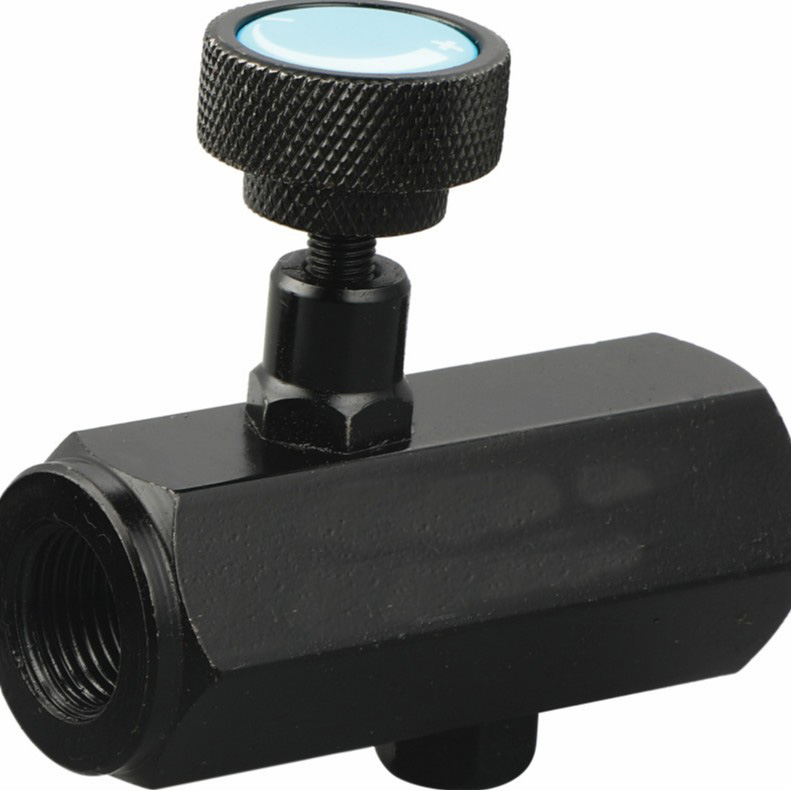
Both a throttle valve and a pressure-compensated flow control valve can change hydraulic cylinder speed by adjusting the flow rate. The difference becomes clearer when the load changes: after a conventional throttle valve is set, its flow can still vary with the pressure drop across the throttling orifice. A pressure-compensated flow control valve automatically adjusts within its operating range to keep the flow relatively stable.
This comparison concerns conventional throttle valves and common two-way pressure-compensated flow control valves. Keeping that scope clear helps explain their different behavior in hydraulic cylinder speed control.
Why can throttle valve flow change without turning the knob?
A throttle valve changes flow by increasing or decreasing the opening through which the oil passes. However, the opening is only one factor that determines the flow rate. The pressure difference across the throttling orifice matters as well.
With oil viscosity and other relevant conditions essentially unchanged, a larger pressure drop produces more flow through the same opening; a smaller pressure drop produces less flow. A fixed throttle opening therefore does not mean a fixed flow rate.
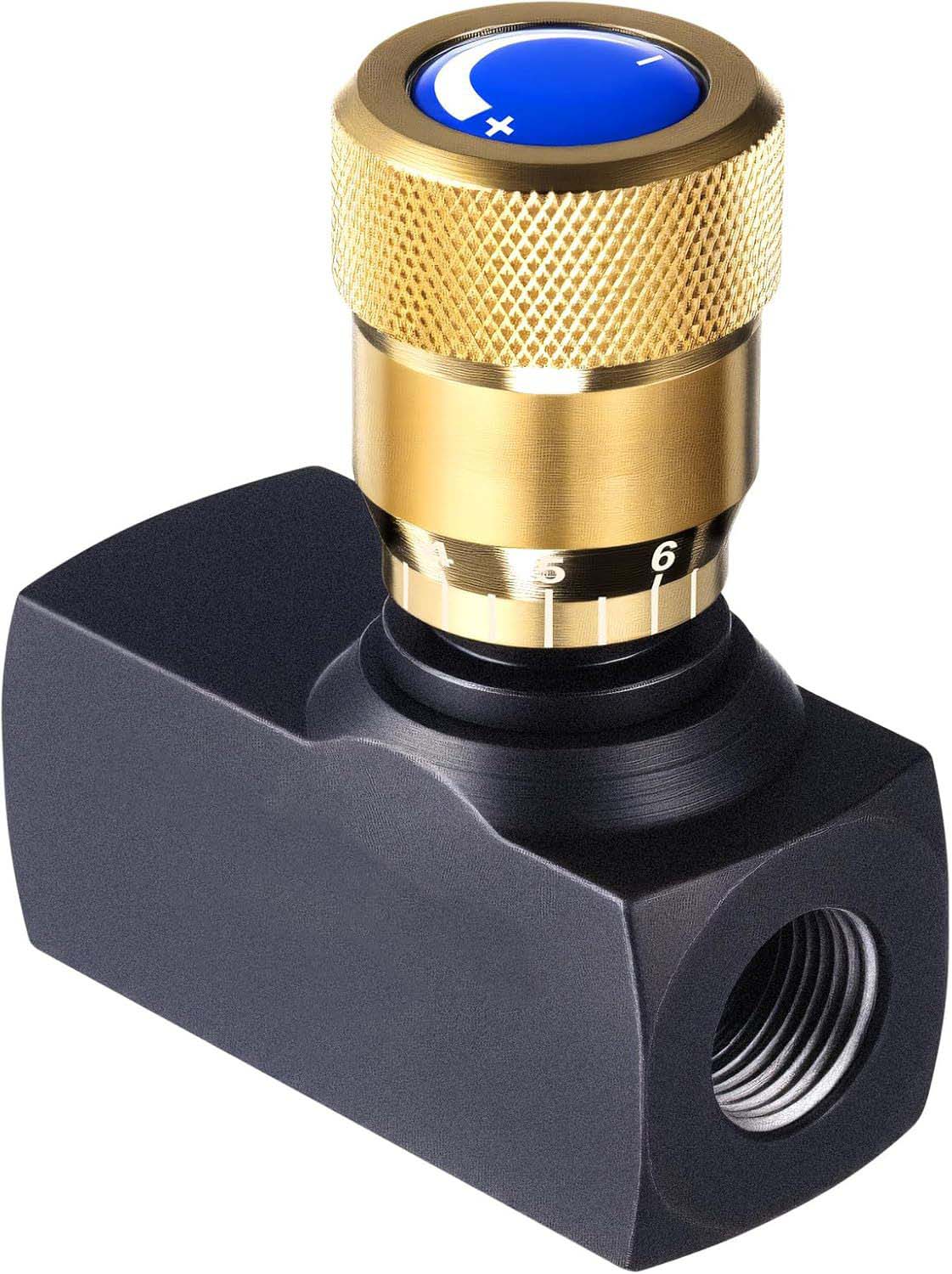
Turning the handwheel changes the throttling opening and sets the flow for the prevailing operating conditions.
Example: a hydraulic cylinder with meter-in flow control
Assume the cylinder uses meter-in throttling, and the supply pressure upstream of the throttle valve, the cylinder return-side pressure, and other relevant conditions remain essentially stable. The resistance to the cylinder’s forward movement then increases:
- To continue moving the load, the pressure in the cylinder’s inlet chamber must rise. This also raises the pressure downstream of the throttle valve.
- With upstream pressure essentially unchanged and downstream pressure higher, the pressure drop available across the throttling orifice decreases.
- Although the adjustment knob has not moved, less oil passes through the throttle valve.
- For the same cylinder moving in the same direction, if changes in leakage are negligible, the lower inlet flow reduces the cylinder speed.
This explains why, under these conditions, a previously adjusted cylinder slows down when the load increases. This direction of change depends on the stated circuit conditions and must not be applied to every hydraulic system.
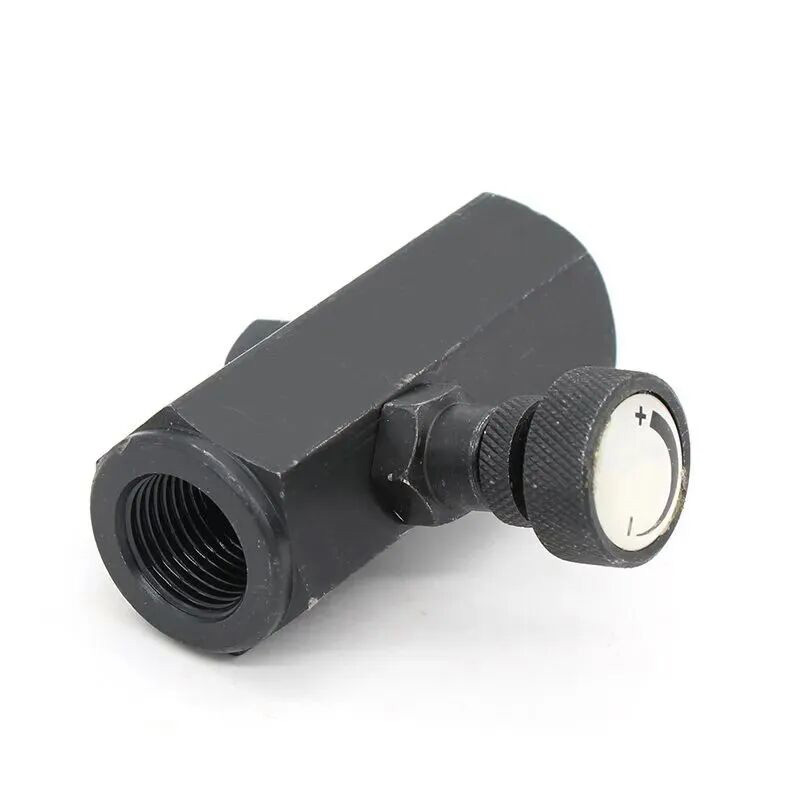
How does a pressure-compensated flow control valve stabilize flow?
A common two-way pressure-compensated flow control valve combines an adjustable throttling orifice and a pressure compensator in series. The adjustable orifice sets the desired flow, while the compensator automatically changes its own flow opening as pressure conditions change.
The purpose of this adjustment is to keep the pressure drop across the adjustable throttling orifice relatively constant. Once the orifice opening is set, changes in load pressure therefore have less effect on the flow passing through it.
The manual setting and the automatic response serve different purposes:
- Turning the adjustment knob sets the required flow rate.
- The internal compensator’s automatic movement reduces the effect of pressure changes on that flow rate.
The valve stabilizes the pressure drop across the throttling orifice, not the pressure throughout the hydraulic system. When the load increases, the pressure required by the cylinder can still rise.
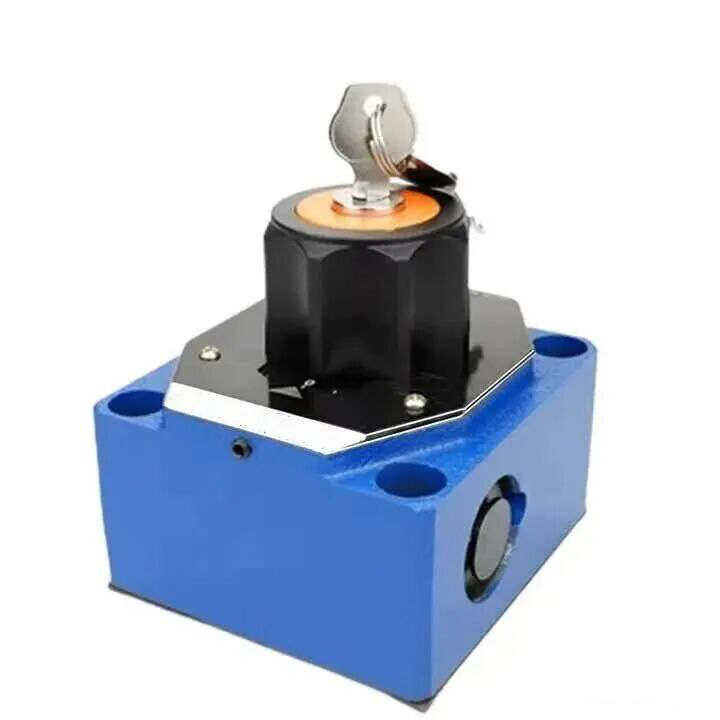
The blue-bodied valve illustrates the pressure-compensated type described here. In addition to an adjustable throttling orifice, this type incorporates a compensation mechanism that responds automatically to pressure changes.
Operating limits: pressure compensation needs the right conditions
Sufficient pressure drop across the valve
A pressure-compensated flow control valve needs sufficient differential pressure between its inlet and outlet to compensate properly. The required value must be checked in the documentation for the specific model; one minimum pressure-drop value cannot be applied to all flow control valves.
In the meter-in example above, if the upstream supply pressure remains essentially unchanged while the load keeps increasing, the downstream pressure continues to rise. The pressure drop available across the valve then becomes progressively smaller.
Once that available pressure drop falls below the minimum needed to maintain the set flow under those operating conditions, the valve can no longer maintain the original flow setting.
Sufficient supply flow
The pump must also deliver enough oil to the branch concerned. If the actual flow supplied to that branch is insufficient, a pressure-compensated flow control valve cannot make up the missing flow.
Temperature, viscosity, leakage, and transient behavior
Pressure compensation does not eliminate every effect of temperature, oil viscosity, or actuator leakage. Products still have specified operating ranges and flow tolerances. Their behavior during startup and other transients may also differ from steady operation.
Consequently, a compensated valve can improve flow and speed stability under suitable operating conditions, but it does not guarantee that a hydraulic cylinder will maintain exactly the same speed at all times.
Throttle valve or pressure-compensated flow control valve: which fits the application?
When load changes are small and speed stability requirements are modest, a conventional throttle valve can meet some speed-control needs.
When the load changes frequently and the adjusted speed needs to be less sensitive to those changes, pressure compensation becomes a factor to consider. However, replacing a throttle valve with a pressure-compensated flow control valve does not by itself establish that the equipment will be suitable.
Selection must still take account of the hydraulic circuit, flow direction, required flow range, and available pressure drop.
The essential distinction is straightforward: a throttle valve adjusts flow by changing an opening; a pressure-compensated flow control valve adds automatic compensation so that pressure changes have less influence on the set flow.
For more information about our hydraulic cylinder manufacturing, projects and services, please contact the Elephant Machinery team.
Contact our team